
Take a look: Candidates discuss taxes, diversity
By Howard Prosnitz, Staff Writer
Teaneck Suburbanite, April 29 2010, p. 2
With Mayor Kevie Feit not seeking a second council term, three incumbents and six challengers are vying for four council seats in an election to be decided on May 11. Teaneck Suburbanite interviewed each candidate and asked each three questions:
1. Why are you running?
2. How can the financial burden on taxpayers be mitigated?
3. What can be done to improve relations among the township's ethnic, racial and religious groups.
(Only the relevant candidate is shown here)
Adam Gussen, Age 37
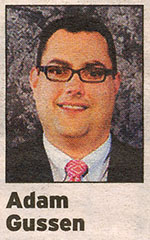 Gussen is seeking his second term. The Claremont Avenue resident has lived in Teaneck his entire life. Gussen attended Rutgers University and is employed in the commercial insurance industry. He is married and has two preschool age children. Prior to his election to the council, he was a board member and vice president of the Teaneck Garden Owners Association.
1. Gussen said that he is seeking reelection, to complete the job he set out to do four years ago. While he believes significant progress has been made, he wants to continue to work on improving recreation, pursuing shared services, restraining spending and ensuring professional management and leadership of the municipal workforce.
2. Sharing services with adjacent municipalities, consolidating duplicative municipal staff and services and, most importantly, seeking a more equitable system for binding arbitration, are keys to reducing the tax burden. "Until we can negotiate with our employees in a fair and level environment, our taxes will continue to rise or our services will continue to decline," he said. However, he believes that the property tax system to pay for municipal services and schools is unfair. "Until we look to a statewide solution for local finding, the opportunities for municipal governments to control taxes are minimal."
3. Gussen notes that while diversity is the reason why many residents moved to Teaneck, the township would be better served by focusing on what residents share in common rather than on what makes them different. "Every separate group has concerns about employment, the economy and has hopes and aspirations for children and family. If we focus on what brings us together, we will go a long way toward improving community relations."


